
Supplying Guadeloupe, Martinique, Réunion, or French Polynesia is no easy task. Between ocean and air freight, port taxes, transit times, and local inventory management, logistics for France’s overseas departments and territories require constant trade-offs between cost, delivery time, and product availability.
At Défi Groupe, we support companies that want to secure their shipments to overseas territories without tying up cash unnecessarily. This 2026 guide details transportation methods, customs formalities, warehousing and order fulfillment solutions, as well as practical strategies for reducing your logistics costs.
Logistics for French Overseas Departments and Territories – Storage, Order Fulfillment, Transportation
Reading time: ~9 min
What Logistics for France's Overseas Territories Actually Entails
A Complete Supply Chain
When we talk about logistics for France’s overseas departments and territories (DOM-TOM), we’re talking about a complete supply chain—not just the shipment of a single package. The process begins with pre-transport by road from your metropolitan site or warehouse, continues with a stop at a loading dock or airport area, followed by sea or air transit, customs clearance upon arrival, and finally local delivery on the island.
Each link in the chain has its own constraints, and a disruption in just one of them is enough to cause a stockout in a market where emergency restocking is costly.
Characteristics of Overseas Territories
Not all of the territories in question are subject to the same rules. Overseas departments and regions such as Guadeloupe, Martinique, Réunion, French Guiana, and Mayotte are part of the French customs territory but are excluded from the European Union’s tax territory. French Polynesia and New Caledonia, on the other hand, are territories with their own tax systems and import regulations. In practical terms, the same shipment requires different documentation depending on whether it is headed to Fort-de-France, Le Port, or Papeete.
For businesses, three questions consistently come up in our discussions. Which mode of freight transport to the French overseas departments and territories should be chosen to maintain profit margins? How can companies meet the delivery deadlines promised to end customers or subsidiaries? And how should they organize storage—whether in mainland France or in overseas warehouses—to handle fluctuations in demand?
Ocean Freight or Air Freight to French Overseas Departments and Territories: How to Decide
The Central Role of Maritime Freight
Ocean freight to France’s overseas departments and territories remains the backbone of overseas trade flows. Industry experts estimate that it costs three to five times less than air freight for equivalent volumes, making it the natural choice for construction materials, furniture, beverages, cleaning products, or any planned restocking.
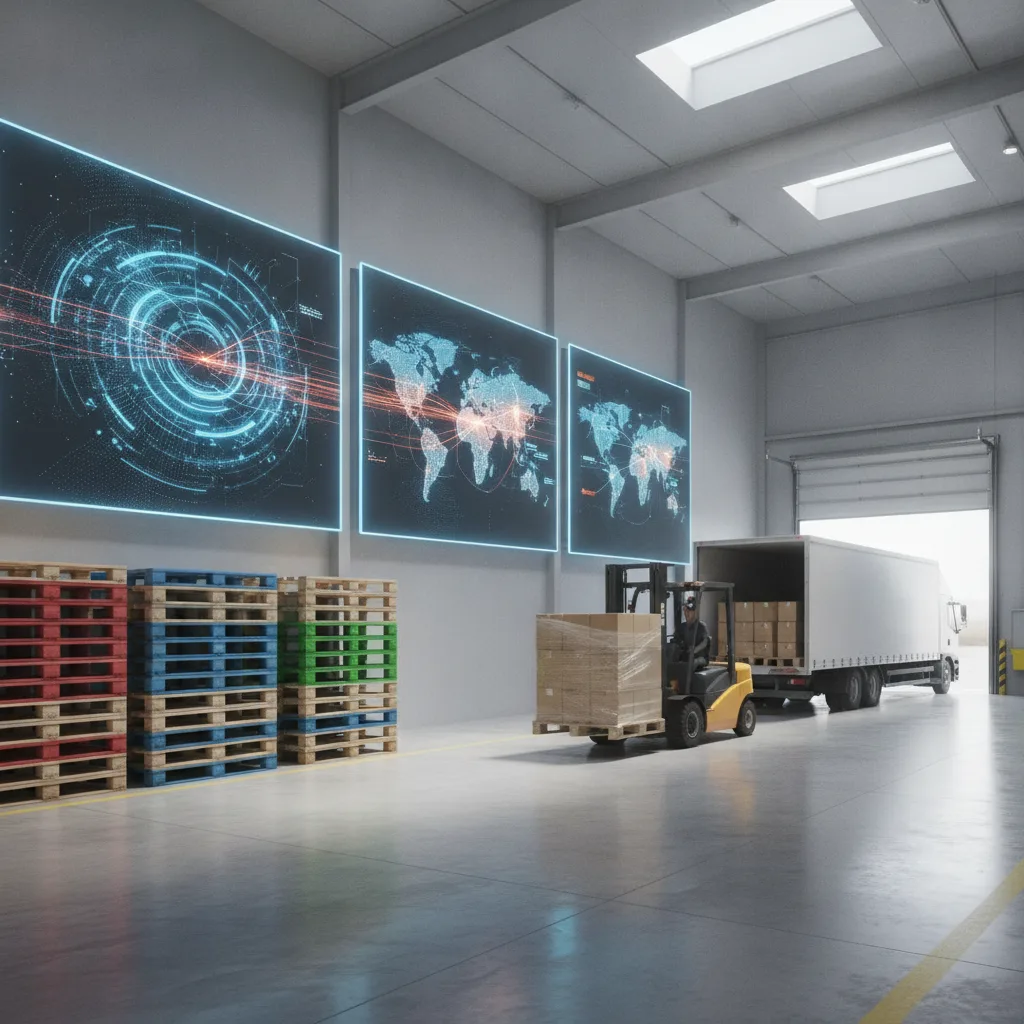
There are two formats: the full container load (FCL), suitable for regular and large shipments, and consolidated shipping to French overseas departments and territories (LCL), which combines shipments from multiple shippers into a single container, allowing you to ship a few pallets without paying for an entire container.
When to Choose Air Freight
Air freight to France’s overseas departments and territories (DOM-TOM) operates on the opposite principle. It costs four to six times more than shipping by sea for a given weight, but it reduces delivery times by a factor of five or ten. It is therefore essential for critical spare parts that bring a production line to a standstill, perishable goods, pharmaceuticals, fast-moving consumer goods such as cosmetics, commercial samples, or high-value goods. In these cases, the opportunity cost of downtime far exceeds the additional cost of express shipping to the French overseas departments and territories.
In between, multimodal shipping allows for precise trade-offs. A base of consolidated ocean freight for regular inventory, supplemented by express air freight for urgent shipments, remains the most effective approach for most of our customers. Our solutions combining both modes are detailed on our page dedicated to air and ocean freight.
| Destination | Estimated Maritime Transit Time | Preferred Mode | Typical Use |
|---|---|---|---|
| French West Indies (Guadeloupe, Martinique) | 15 to 20 days | Ocean Freight (FCL or LCL) | Regular restocking, large volumes |
| Reunion, Mayotte | 25 to 30 days | By sea or air for urgent shipments | Indian Ocean region, seasonal stocks |
| French Guiana | Near the Caribbean | Maritime, occasional air transport | Industry, Construction Sites, Equipment |
| French Polynesia, New Caledonia | 35 to 45 days | Maritime: Planned; Air: Critical | Advance Procurement |
Good to know
Ocean transit times do not include pre-shipment, waiting time for the vessel’s departure, or customs clearance upon arrival. Be sure to build in a safety margin of several days when planning your supply schedules.
What are the actual delivery times to overseas territories?
For package shipments, La Poste estimates average delivery times of five to ten days to the Antilles, Réunion, and French Guiana, and ten days or more to French Polynesia and New Caledonia, depending on the shipping method chosen. Colissimo also offers air, sea, or combined shipping options, with the combined option serving as a compromise between cost and speed.
These guidelines are useful for estimating delivery times for packages to France's overseas departments and territories, but they apply to individual packages, not pallets or containers.
For commercial freight, the estimated delivery time depends primarily on the frequency of sailings and the efficiency of port operations. A shipment of goods bound for Guadeloupe, Martinique, or Réunion that misses a departure window can be delayed by an entire week. That is why we focus on planning shipment flows rather than on ad-hoc shipments, with regular departures from Roissy CDG and advance notice of docking dates.
Customs Clearance, Port Tax, and Overseas VAT
Taxation is the main sticking point in import-export trade with the French overseas departments and territories. Any shipment to the overseas departments requires a customs declaration, even when it originates in mainland France, since these territories fall outside the European tax system.
Upon arrival, the following taxes apply: the “octroi de mer,” a local tax based on the value of imported goods, with rates that vary by territory and product category; the regional “octroi de mer”; and an overseas VAT, the rate of which differs from that in mainland France. In Mayotte and French Guiana, VAT is temporarily not applicable, which further alters the calculation.
The quality of the documentation determines how smoothly the process goes. A detailed commercial invoice, an accurate customs bill of materials, a consistent declared value, any required certificates for regulated products, and safety data sheets for hazardous materials—everything must be ready before departure. A mistake in the customs code results in days of delays and storage fees.
Our customs team assists with these procedures, as explained on our page about customs and transportation at Roissy CDG, and our status as an Authorized Economic Operator ensures that inspections are conducted securely.
Warehousing and Order Fulfillment for Overseas Markets
Storage in mainland France
The issue of warehousing is a key factor. Two models are in competition. The first involves keeping inventory in mainland France, near the shipping hubs, and shipping on demand. It limits tied-up capital and simplifies returns management, but increases delivery times for customers.

Advanced Overseas Storage
The second approach involves transferring part of the inventory to an overseas warehouse, which brings the merchandise closer to the consumer and enables delivery to the island within twenty-four or forty-eight hours, at the cost of more demanding demand forecasting.
In practice, combining the two yields the best results. A forward stock for fast-moving items, a central inventory in mainland France for the long tail, and ad hoc air freight for stockouts. This model requires reliable order fulfillment, a dynamic inventory system, and integrated systems. We operate this type of system from our hubs near Roissy, with our transportation management system overseeing the flow of goods.
E-commerce Logistics for France's Overseas Departments and Territories and Last-Mile Delivery
Specific Challenges of Overseas E-Commerce
E-commerce logistics for France’s overseas departments and territories adds another layer of complexity. End customers compare their experience to what they’re used to in mainland France, even though the cost structure is completely different. There are three key points that deserve special attention before you begin selling to overseas territories.
- Transparency regarding local taxes, since the port tax and overseas VAT may come as a surprise to the buyer if the amount is not disclosed at the time of payment.
- The choice of a last-mile partner on the island, since the density of addresses, the terrain, and accessibility determine the first-delivery success rate.
- Reverse logistics is often overlooked, even though an uncoordinated return shipment costs more than the product itself when shipped to distant destinations.
Our outsourcing services are described on our e-commerce logistics outsourcing page.
Reduce the logistics costs of your shipments
There’s no such thing as cheap shipping to France’s overseas departments and territories, but there is such a thing as optimized logistics costs. The key factor is still container fill rate. Switching from weekly shipments with partial loads to a schedule that allows for full container loads significantly reduces the cost per pallet.
The second factor relates to the quality of packaging, since ocean freight is billed based on both volume and weight, and a poorly assembled pallet wastes several centimeters of usable space. The third factor involves categorizing items based on their urgency, so as not to pay for air freight for products that could wait for the next ship.
In addition, there are less visible but equally cost-effective strategies, such as ensuring the reliability of customs data to avoid detention fees, consolidating shipments with other shippers, planning ahead for seasonal peaks, and selecting appropriate Incoterms that clarify the allocation of costs and risks.
Key Takeaways
The right metric is not the transportation cost alone, but the total cost, including local taxes, tied-up inventory, and avoided stockouts.
Choosing an Overseas Logistics Provider
A freight forwarder serving the French overseas departments and territories is judged by its ability to manage the entire supply chain rather than by a single rate. Check for reliable partners at the destination—in Baie-Mahault for Guadeloupe, Fort-de-France for Martinique, or Le Port for Réunion—as well as their expertise in customs procedures, their ability to handle specialized shipments such as refrigerated freight, hazardous materials, or oversized loads, and the quality of their day-to-day operational tracking.
| Criteria to Check | What to Watch For |
|---|---|
| Reliable Local Partners | Locations in Baie-Mahault, Fort-de-France, or Le Port |
| Understanding Customs Procedures | Tax Returns, Port Tax, Overseas VAT |
| Handling Special Transactions | Refrigerated freight, hazardous materials, oversized loads |
| Operational Monitoring | Traceability from pickup to delivery |
| Status and Certifications | Authorized Economic Operator |
That is precisely our niche. Défi Groupe combines road, air, and ocean freight with hand-carry services, our status as an Authorized Economic Operator, integrated customs expertise, and rigorous tracking of every shipment, from pickup to delivery. Above all, our clients cite our responsiveness, our ability to adapt, and our attentive, personalized support—three qualities that matter twice as much when a shipment is traveling ten thousand kilometers.
Start organizing your shipments to overseas territories now
Logistics for France’s overseas departments and territories rewards forward planning. By striking the right balance between ocean and air freight, ensuring the accuracy of your customs declarations, positioning your inventory in the right locations, and streamlining your last-mile delivery, you can turn a geographic constraint into a competitive advantage in markets where few players know how to deliver quickly and accurately.
Our supply chain experts are available to audit your current logistics processes and develop a master plan tailored to your volume. To receive a detailed cost estimate for your destination, request a quote or contact our team.
FAQ on Logistics for France's Overseas Departments and Territories
Can dangerous goods be shipped to the French overseas departments and territories?
Yes, provided that the applicable regulations for the chosen mode of transport—IMDG for sea transport and IATA for air transport—are followed, using approved packaging, proper labeling, and a shipper’s declaration. Certain products, particularly aerosols and flammable liquids, are accepted for air transport with quantity restrictions that often make sea transport a more suitable option.
What kind of insurance should I get for a shipment to an overseas territory?
Transportation agreements set compensation limits calculated per kilogram, which are significantly lower than the actual value of most goods. Ad valorem insurance, based on the declared value, is recommended whenever the shipment contains valuable goods or equipment that would be difficult to replace locally.
Which Incoterms should be used for shipments to French overseas departments and territories?
It all depends on the level of service your recipient expects. An Incoterm such as DAP places the responsibility for the main transportation on the shipper and clarifies the commitment to the customer, whereas FCA or FOB leave the buyer in charge of freight and local taxes. The key rule is to specify in writing who is responsible for paying the port tax.
Can the "hand carry" method be used for shipments to overseas territories?
Yes, for small, sensitive, or high-priority packages, an escort service ensures door-to-door delivery on the first available flight, with continuous tracking. This solution is used as a contingency measure for critical parts or high-value items.
How can we manage seasonal spikes in travel to the Caribbean and Réunion?
The end of the year, carnival season, and the start of the local school year put a strain on maritime capacity. Booking space in advance and moving up shipments by several weeks remains the only reliable solution, as air freight is significantly more expensive during peak periods.