
A signed painting, a monumental sculpture, a collectible photographic print, or a contemporary installation cannot be transported like a standard shipment of goods and require specialized art transport insurance. As soon as the piece is removed from its wall, it enters a high-risk zone where a jolt during handling, prolonged vibration, or changes in humidity can result in very costly damage.
Art transport insurance is therefore a contractual matter in its own right, distinct from the carrier’s civil liability. However, it is still important to understand the types of policies available, how to declare the value, and the steps to take in the event of damage. This 2026 guide provides an overview, from the initial condition report to reservations upon delivery.
Art Transportation Insurance, Coverage, and Claims
Reading time: ~9 min
- Why Traditional Insurance Is Almost Never Enough
- Insurance for the Work and the Carrier’s Liability: The Key Distinction
- The Nail-to-Nail Guarantee: From Detachment to Reattachment
- Declared Value, Approved Value, and Replacement Value
- What Is Covered by Comprehensive Art Insurance?
- The Most Common Warranty Exclusions
- Documents to Gather Before Shipping
- Insuring a Work of Art During International Transport
- Item Damaged Upon Delivery: What to Do
- Take It a Step Further with Artwork Transportation Insurance
- FAQ
Why Traditional Insurance Is Almost Never Enough
Limitations of Home and Business Insurance
Many owners, galleries, and foundations discover the problem too late. A work of art insured under a home insurance policy, a professional gallery policy, or exhibition space coverage is protected where it is normally located, but not necessarily while it is being transported. Academic studies on the transportation of works of art highlight this important point: it is essential to verify whether the existing policy includes a rider that explicitly covers transportation; otherwise, the artwork travels without any real safety net between two locations.
The second blind spot concerns handling and temporary storage. The transport of art involves a series of delicate operations: taking the artwork down, packing it, securing it in a shipping crate, loading, transport by road, air, or sea, storage in a bonded warehouse, unloading, and installation. Each of these steps may be handled by a different party and thus covered by a different contract. It is precisely in these gray areas that compensation disputes arise.
Insurance for the Work and the Carrier’s Liability: The Key Distinction
Two Different Approaches to Protection
The carrier’s civil liability is not comprehensive insurance for the artwork. It provides compensation for damages for which the carrier is legally liable, within the limits set by the contract of carriage and applicable international conventions. For international road transport, the CMR Convention caps compensation at 8.33 SDRs per kilogram of gross weight that is missing or damaged—a weight-based calculation that is completely disconnected from the value of a masterpiece. For inland waterway transport, the Budapest Convention applies a comparable cap. In other words, a work of art that is lightweight yet of very high value is structurally undercompensated under the carrier’s liability regime alone.
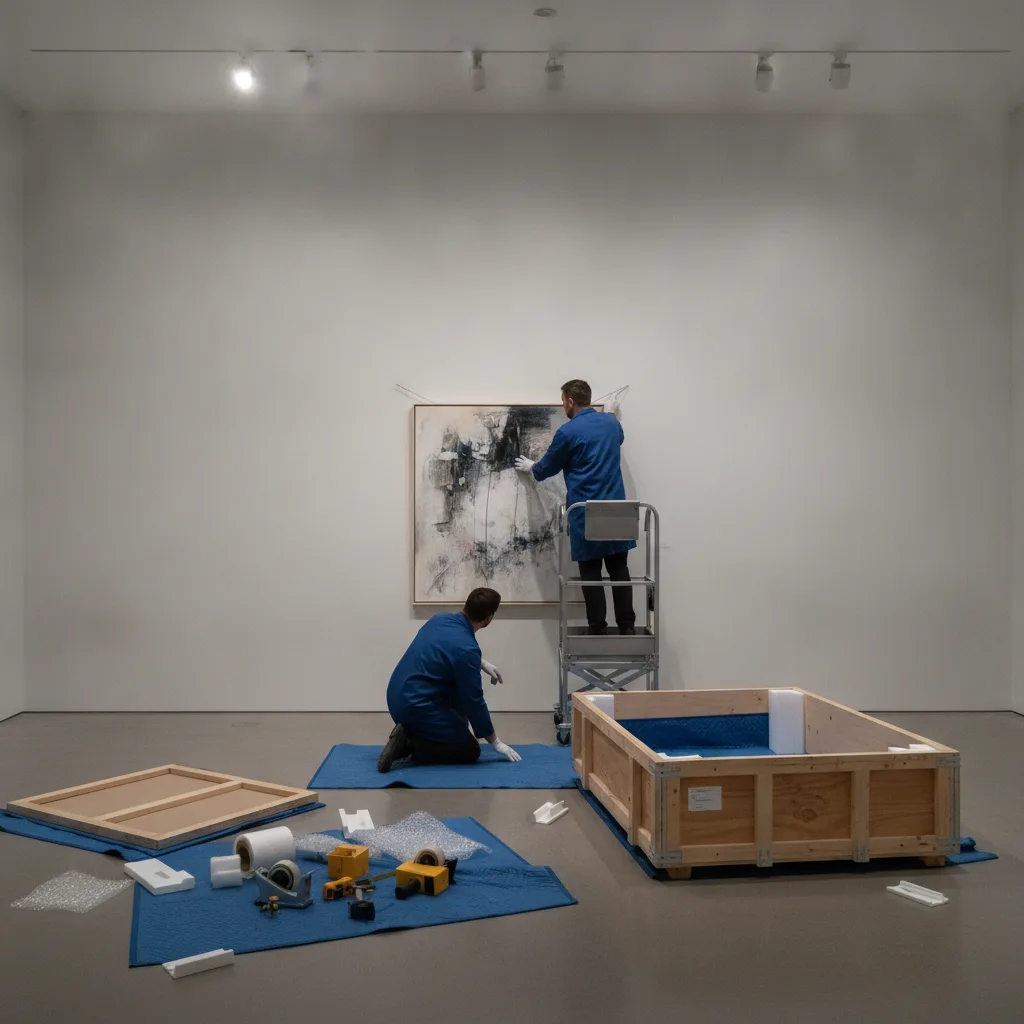
Conversely, a dedicated fine art transportation insurance policy, underwritten on an ad valorem basis, provides compensation based on the declared value of the item rather than its weight. This is the approach taken by specialized insurers in the fine art market, such as Hiscox Fine Art, AXA XL Museum Insurance, and Helvetia Fine Art. The table below summarizes the main options.
| Solution | What it protects | Main limitation |
|---|---|---|
| Home insurance or gallery insurance policy | The artwork in its usual place of storage | Transportation is often excluded or subject to a specific exception |
| Carrier's Liability | Damages for Which the Service Provider Is Liable | Limits per kilogram, grounds for exemption, mandatory reserves |
| Ad valorem Insurance for Works of Art | Compensation up to the declared value | Requires an accurate statement and solid supporting documentation |
| Nail-to-Nail Warranty | The entire journey, from dropping out to returning | Higher bonus and specific contract terms |
| Artwork Exhibition Insurance | Transport, installation, duration of display, and return | May exclude certain countries, transactions, or risks |
The Nail-to-Nail Guarantee: From Detachment to Reattachment
Continuous coverage for every stage of transport
The “nail-to-nail” coverage is the standard option for loans, fairs, and exhibitions. It covers removal, packing, transportation, installation, display, and return, including specialized handling and temporary storage, subject to the specific terms and conditions of the policy.
Its main benefit is that it eliminates gaps in coverage between the owner’s insurance, the carrier’s insurance, and the host venue’s insurance. It becomes virtually indispensable whenever a work of art is transported for a temporary exhibition, crosses international borders, or passes through the hands of several successive service providers. For art collection transport coverage, multiple pieces can be grouped under a single policy accompanied by a detailed list of valuations for each piece.
Good to know
The “nail-to-nail” warranty is never automatic. It must be requested, costed, and confirmed in writing prior to pickup, specifying the dates, addresses, and services covered.
Declared Value, Approved Value, and Replacement Value
How to Determine the Correct Basis for Compensation
The amount of compensation depends directly on how the value was determined in the contract. The declared value is the amount specified by the shipper at the time of shipment. The agreed-upon value is accepted in advance by the insurer based on supporting documentation, which prevents any dispute over the amount after a loss. The replacement value depends on market conditions on the date of the loss and may require an appraisal by an art expert. Finally, the purchase price or gallery selling price does not always correspond to the insurable value.
For a valuable artwork, the agreed-upon value remains the safest option. Underreporting the value to save on the insurance premium exposes you to a proportionally reduced payout. Overreporting the value without supporting documentation exposes you to a dispute from the insurer at the time of settlement. The declared value for art insurance must therefore be based on a recent appraisal, an invoice, a documented market valuation, or an independent expert’s report. The same reasoning applies to insurance for the transport of paintings, sculptures, or art photographs, where the cost of restoration may exceed the value of a print.
What Is Covered by Comprehensive Art Insurance?
Specialized insurance policies generally provide comprehensive coverage, meaning that anything not expressly excluded is covered. The core coverage includes accidental property damage: falls, impacts, breakage, tears, crushing, fire, water damage, and vehicle accidents. This is supplemented by coverage for total loss, disappearance, and theft, provided that the obligations regarding supervision, parking, and storage specified in the contract are met.
Certain additional coverages are worth negotiating, particularly depreciation after restoration—which compensates for the loss in market value of a repaired artwork—or coverage of emergency salvage and conservation costs. Indirect damages, however, such as loss of earnings or emotional distress, are generally excluded. Insurance for the transport of an art installation must also specify the coverage for technical components, such as pedestals, screens, and electronic components, which may be covered under different terms than the artwork itself.
The Most Common Warranty Exclusions
Standardized information documents (IPIDs) and the general terms and conditions of fine art insurers share several recurring exclusions. The first is improper packaging: packaging, crating, or securing that is unsuitable for the nature of the artwork may void the coverage. The second is inherent defects, normal wear and tear, aging of materials, varnish cracking, gradual damage, and pest infestations. The third is willful or fraudulent misconduct by the insured, as well as misappropriation committed with the insured’s complicity. Unexplained disappearances and simple inventory discrepancies are also among the cases typically excluded.
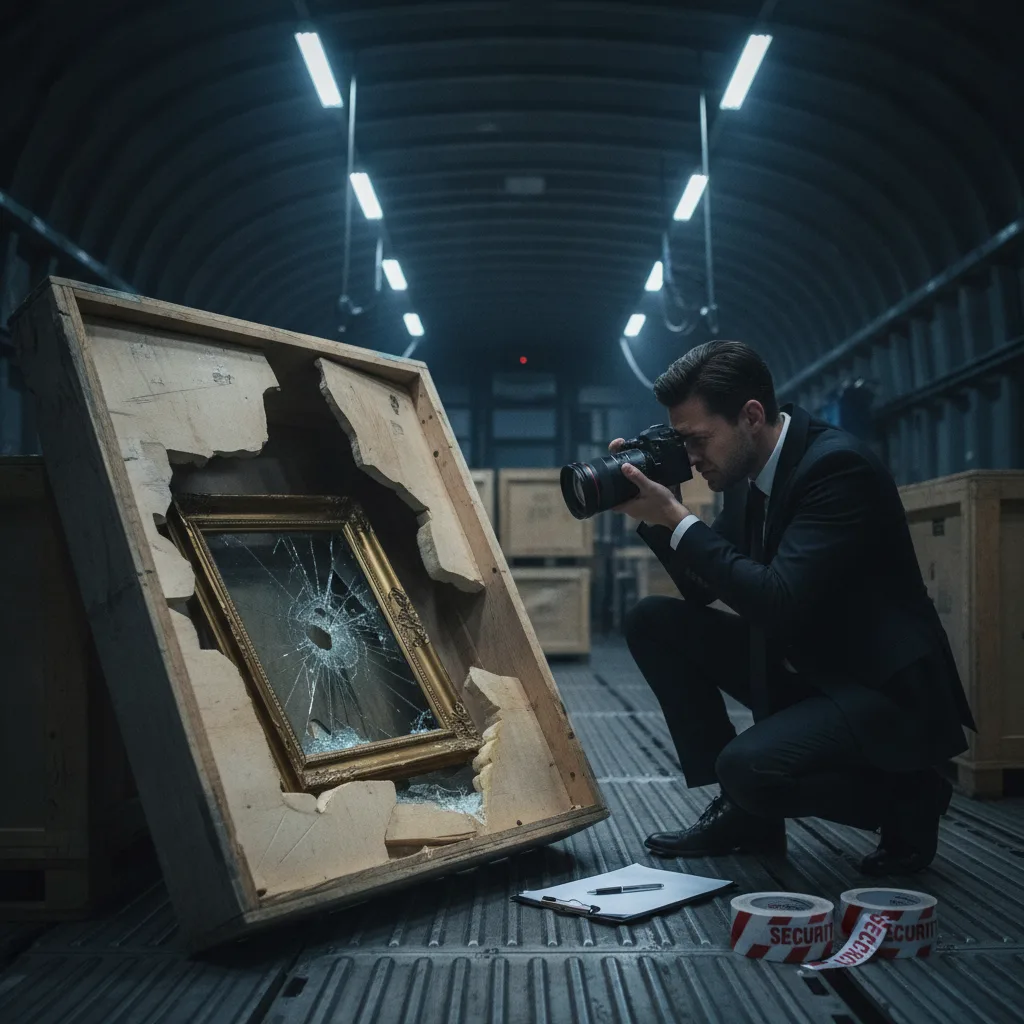
Added to these are so-called political risks: foreign or civil war, revolution, riot, confiscation, seizure, requisition, or detention by a public authority. Finally, recent contracts include a cyber exclusion and an international sanctions clause, which voids the coverage when the transaction involves a country or counterparty subject to an embargo. All of these clauses must be reviewed before signing, along with the deductibles and limits per claim and per occurrence.
Important
The Insurance Code requires that exclusions be specific and limited, but their interpretation depends on the facts. A detailed, dated damage report remains your best protection against a denial of coverage.
Documents to Gather Before Shipping
A complete application speeds up the underwriting process and ensures future coverage. Here are the documents insurers most often request for insurance covering the transport of valuable works of art.
- Purchase invoice, recent appraisal, or certificate of value, as well as a certificate of authenticity, if available
- Detailed condition report, accompanied by photographs taken before packing, showing the item from all angles and close-ups of fragile areas
- Artwork specifications: dimensions, weight, materials, technique, date of creation, and condition
- Description of the selected packaging: custom shipping crate, packing materials, weather protection, and cushioning materials
- Complete transportation plan, departure and arrival addresses, mode of transport (road, air, or sea), dates, duration of temporary storage, and identities of the parties involved
Insuring a Work of Art During International Transport
With international shipments, the complexity increases significantly. International artwork transport insurance must cover multimodal transport, transshipments, waiting periods in warehouses, and customs procedures. It is essential to review the list of excluded countries, overnight parking conditions, escort requirements, and the rules applicable to temporary admission or the ATA Carnet. A work of art held up at customs remains at risk, so the question of who insures it during this period must be resolved in advance.
This is where choosing the right logistics provider is just as important as choosing the right insurer. At Défi Groupe, our status as an Authorized Economic Operator, our location in Roissy, and our customized solutions for road, air, sea, and hand-carry shipments enable us to ensure rigorous tracking of every shipment, from pickup to delivery. Our teams coordinate custom packaging, specialized handling, customs formalities, and document traceability—all elements that the insurer will examine should a claim arise. You can view our dedicated fine art shipping services in Paris.
Item Damaged Upon Delivery: What to Do
The first few hours are critical to the outcome of the case. Damage noted without a written reservation at the time of delivery significantly weakens a claim against the carrier and complicates the process of filing an insurance claim. Here is the sequence of steps to follow systematically.

- Take photos of the box, the packaging, and the artwork before unpacking it completely, and keep all the packaging, which will be used for the appraisal.
- Record specific and well-founded reservations on the delivery document, describing the nature and location of the damage, and then confirm them in writing to the carrier within the contractual time limits
- Notify the insurer and the broker immediately; file a police report in the event of theft; have a joint damage assessment report prepared; and wait for their approval before proceeding with any restoration work, except for urgent preventive measures.
The claim will then be based on the initial condition report, proof of value, a report from a restorer or expert, and estimates for restoration. The more thoroughly the difference between the item’s condition before and after transport is documented, the faster and more complete the compensation will be.
Take It a Step Further with Artwork Transportation Insurance
Ensuring the safe transport of art is less a matter of luck than of method. Check the transportation coverage in your existing contracts, opt for an art transportation insurance policy with an agreed-upon value, require “nail-to-nail” coverage whenever there is an exhibition or loan, read the exclusions, and document every step. The rest depends on the operational quality of your service provider, from packaging to final delivery.
To ensure the security of your next shipment, contact our experts by requesting a quote or through our contact page.
FAQ
Who is responsible for paying the insurance—the seller, the buyer, or the carrier?
It all depends on the Incoterm chosen and the contract entered into between the parties. Some Incoterms place the obligation to provide insurance on the seller, while others leave the matter open, which creates a risk of duplicate coverage or, worse, a lack of coverage. This issue must be settled in writing before pickup.
Can you insure a work of art without a purchase invoice?
Yes, provided that you submit additional supporting documentation: an appraisal by a certified expert, a gallery certificate, comparable sales data, or inclusion in a catalog raisonné. The insurer will be more likely to accept a certified value if the supporting documentation is consistent and up-to-date.
Is the packaging itself covered by the policy?
The crate and packaging materials are generally not insured as property, but their quality determines the coverage for the artwork. Packaging that does not comply with the guidelines may result in a reduction or denial of compensation.
Do you need a new policy for each shipment?
For a one-time shipment, a single-trip policy is sufficient. Galleries, auction houses, and active collectors prefer an annual policy with periodic reporting of changes, which reduces setup time and evens out the insurance premium.
What happens if the artwork is damaged but can be repaired?
The insurer covers the cost of restoration by a certified professional. If the policy includes depreciation coverage, additional compensation is provided to offset the loss in market value observed after restoration, based on a joint appraisal.