

Regulations Governing the Transport of Cosmetics in Europe: 2026 Guide
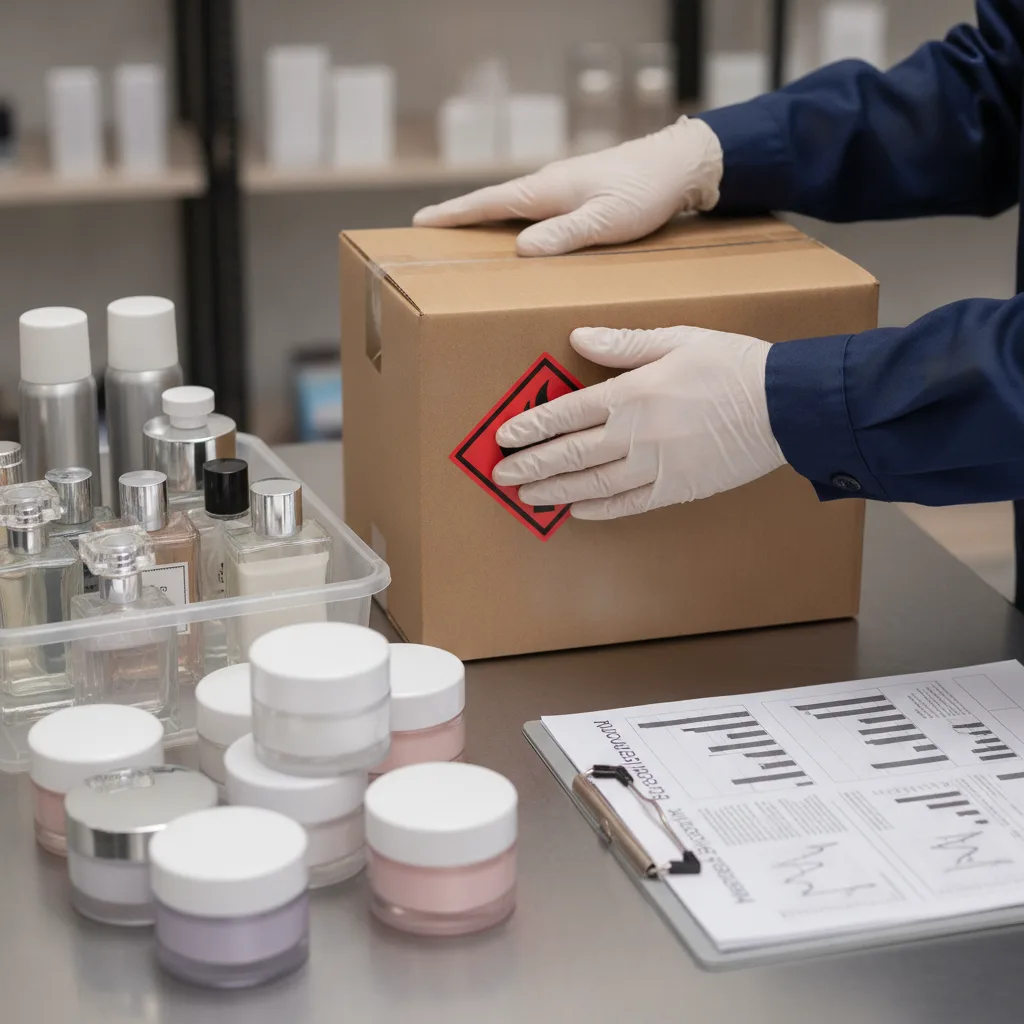
Perfumes, aerosols, nail polish, and solvent-based products are not transported in the same way as moisturizers. Classification, packaging, documentation, storage, and traceability: these are the key areas to master to ensure the safe and consistent flow of cosmetics throughout Europe.
Two Regulatory Frameworks That Should Not Be Confused
A cosmetic product’s compliance and transportability are based on two complementary principles. A product that is fully authorized for sale may still be subject to transport restrictions if its formula or packaging poses a hazard.
The Cosmetics Regulation
Regulation (EC) No. 1223/2009 establishes the framework for product safety, composition, labeling, traceability, the Product Information File, and the liability of the person responsible for placing the product on the market.
Transportation Regulations
The ADR governs the transport of dangerous goods by road. Depending on the mode of transport used, the IMDG Code for maritime transport and the rules applicable to air transport must also be taken into account. These regulations cover classification, packaging, labeling, documentation, and the responsibilities of those involved.
The CLP Regulation on the classification and labeling of hazardous substances and mixtures does not supersede these regulations: finished cosmetic products intended for end users and the transport of dangerous goods are subject to specific regulatory frameworks. Product compliance and transport compliance must therefore be managed separately.
| Comparison | Cosmetics Regulations | ADR and modal rules |
|---|---|---|
| Objective | Product Safety for the User | Transportation Safety |
| Scope | Composition, Labeling, Marketing, Traceability | Classification, Packaging, Labeling, Loading, and Documentation |
| Key Documents | DIP, safety assessment, CPNP notification | MSDS and shipping documents, when required |
| Speakers | Person in Charge and Operators of the Production Line | Sender, packer, shipper, carrier, and recipient |
| Inspections | Market Supervisory Authorities | Road, Port, and Airport Inspections |
Which cosmetics are considered hazardous materials?
Classification depends on the formulation and packaging, not on the marketing category. The safety data sheet provided by the manufacturer or formulator remains the starting point for the analysis. It is used to confirm the class, the UN number, the packaging group (if applicable), and any restrictions specific to the mode of transport.
| Family | Frequent Ranking | Key Checks |
|---|---|---|
| Perfumes, eau de toilette, cologne, and alcohol-based body mists | Often Class 3; some fall under UN 1266 | MSDS, flash point, UN number, packaging |
| Nail polish, nail polish remover, base coats, and solvent-based products | Class 3 according to the formula | Composition, packaging group, and applicable regulations |
| Hairsprays, mousses, deodorants, and self-tanning sprays | Class 2, gas | Capacity, valve protection, and labeling |
| False eyelash adhesives, brush cleaners, and alcohol-based lotions | Variable ranking | Solvents, concentration, and MSDS information |
| Water-based creams, shampoos, and serums | Generally Unclassified | Waterproofing, Temperature, and Impact Protection |
| Bar Soaps and Powders | Generally, general cargo | Moisture, Staling, and Product Integrity |
In this article
Affected ProductsShipping PerfumesRequired DocumentsLogistics ResponsibilitiesRoadside Inspections 2026Stability and PackagingD&fi SolutionFAQ
Are your shipments compliant?
Have your guidelines and procedures reviewed.
A cosmetics catalog to be mailed out regularly?
A reference-by-reference audit makes it possible to distinguish between classified products, general merchandise, and shipments that may be subject to quantity limits.
How do I ship perfumes in compliance with ADR regulations?
1. Reviewthe MSDS and confirm the classification.
2. Useapproved packaging when required and include leak-proof padding.
3. Applythe UN number, official name, hazard labels, and markings corresponding to the selected classification.
4. Preparethe transport document and written instructions when these requirements apply.
5Entrustthe shipment to trained teams and a carrier whose vehicles, equipment, and routes are appropriate, particularly with regard to tunnel restrictions.
The Limited Quantities System
For certain small packages, Chapter 3.4 of the ADR provides for a limited-quantity (LQ) regime. This regime may ease certain requirements provided that the limits per inner packaging are met, the package does not exceed 30 kg gross weight for a combined package, and the LQ diamond remains legible on the outer packaging.
This system is particularly useful for e-commerce shipments, but its applicability must be confirmed based on the product’s exact classification. It does not eliminate the need for sturdy packaging, appropriate internal cushioning, or consistent procedures.
What documents do you need to prepare to ensure compliance with shipping regulations?
The documentation must be consistent across product information, transport classification, and commercial data. A discrepancy in the documentation may result in refusal of shipment or detention.
For marketing
- Product Information Sheet
- Safety Assessment
- Qualitative and Quantitative Composition
- Certificates and Traceability Information
- Compliant Labeling Mockup
- CPNP Notification Prior to Market Introduction, When Required
For transportation and export
- Up-to-date MSDS
- UN number, official name, class, and packaging group, if applicable
- Shipping document and number of packages, when required
- Written instructions for the driver, when required
- Invoice, packing list, and tariff classification
- Original supporting documents and customs formalities for shipments outside the EU
For exports outside the European Union, the destination country’s requirements may apply in addition to the European framework: local registration, ingredient restrictions, translation of labeling, or specific tax regulations. The D&fi team provides support for these matters through its customs service based at Roissy CDG.
Carriers, logistics providers, and shippers: each has its own obligations
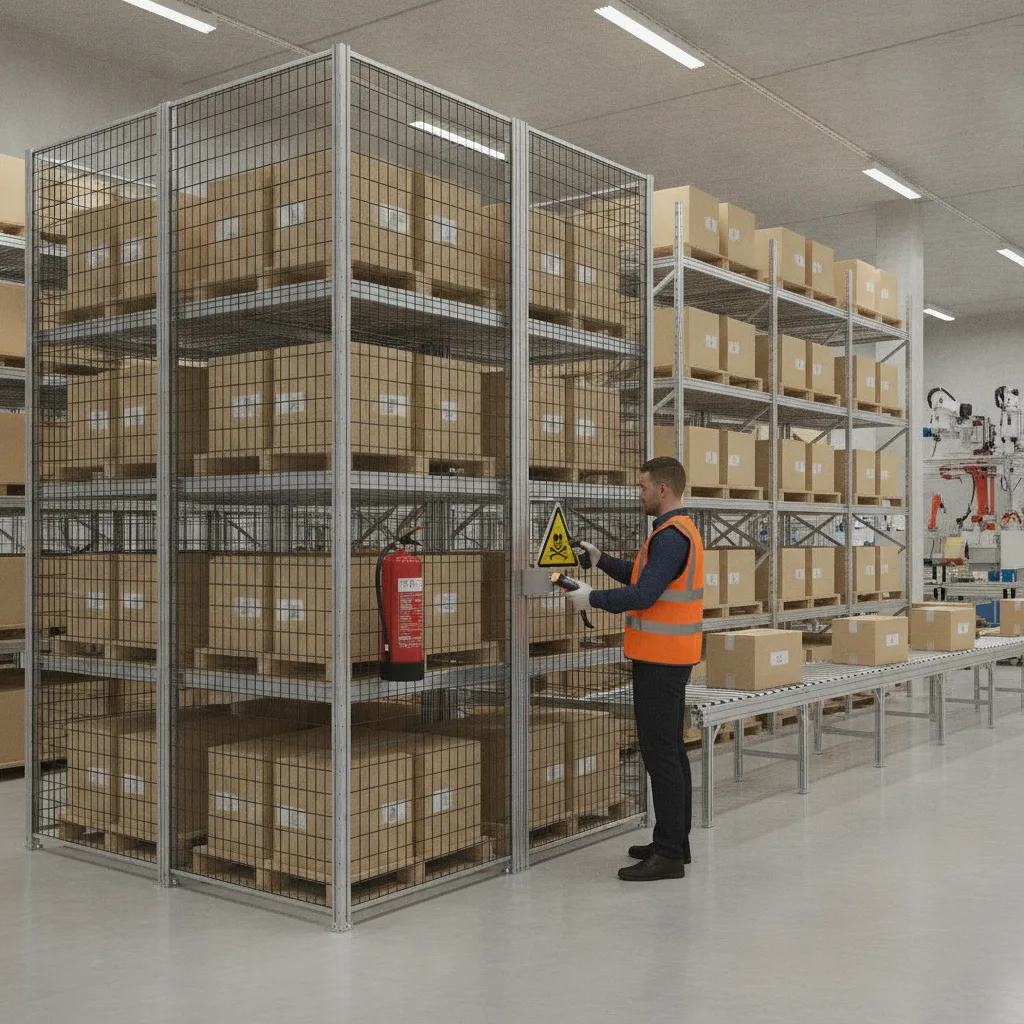
Compliance does not rest solely with the driver. The shipper provides the correct classification and information; the packer uses the appropriate packaging; the loader oversees the handover to the carrier; and the carrier verifies the conditions of acceptance within the scope of its responsibilities.
A service provider that stores and prepares flammable cosmetics must have an organizational structure tailored to the specific products actually present: dedicated areas when necessary, compatibility guidelines, ventilation, fire prevention measures, staff training, appropriate packaging, and labeling procedures.
Logistics professionals must maintain reliable traceability between lot numbers, packages, shipment dates, and recipients. This facilitates lot recalls, quality investigations, and dispute resolution. D&fi’s Transport Management System allows users to track and reconstruct the history of operations.
How European Directive 2025/1801 Changes Inspections
Delegated Directive (EU) 2025/1801 updates the annexes concerning roadside inspections of dangerous goods. It aligns the checklist with the current ADR and more clearly links each violation to the party that may be responsible for it.
Violations are classified into three risk categories, with Category I representing the highest level. For brands and e-commerce retailers, the stakes are high: authorities can review the classification, documentation, packaging, labeling, and the roles of the various parties involved, and then detain the shipment until it is brought into compliance when the situation warrants it.
Temperature, Stability, and Packaging Integrity
Regulatory compliance is not enough if the product arrives in a compromised condition. The conditions documented by the manufacturer must be followed during storage and transport: temperature, humidity, light, shock, and duration of exposure. Some organizations specify a controlled range of approximately 15 to 25 °C, but this range is not a universal rule: it must correspond to the product’s stability data.
A perfume leak, a damaged aerosol valve, or a cracked bottle can cause an incident during transit and render the product unsuitable for sale. The rules for securing, stacking, and protecting these items must therefore be tailored to the actual fragility and hazardous nature of the products, just as they are for other sensitive and high-end product lines.

A cosmetics supply chain managed by a single point of contact
Compliance depends on consistency: a product that is correctly classified but poorly packaged, a package that is properly labeled but stored in an inappropriate area, or a shipment without traceability—all of these create vulnerabilities.
D&fi Groupe assists brands, manufacturers, and e-retailers in managing their regulated logistics processes: product analysis, warehousing, order fulfillment, packaging, and transportation by road, air, sea, or hand-carry, as well as customs clearance and tracking through to delivery, including to France’s overseas departments and territories.
Our status as an Authorized Economic Operator, our international expertise, and our ability to manage 3PL, 4PL, or 5PL operations enable us to ensure the security of operations without having to work with multiple service providers.
Your study may include:
- MSDS Audit and References
- Volumes and Frequencies
- Storage and Preparation
- Multimodal transport
- Customs and Traceability
In summary: Ensuring the Safe Transport of Cosmetics in Europe
Ensuring alignment between cosmetic regulations and transportation rules helps safeguard the product, the supply chain, and the customer. Accurate classification, compliant packaging, controlled quality labeling, complete documentation, proper storage, batch traceability, and proactive preparation for inspections form a cohesive system that reduces the risk of delays.
With changes to traffic inspections in 2026, flow auditing is becoming an operational investment. D&fi can help you turn this regulatory requirement into a more reliable and transparent organizational structure.
Frequently Asked Questions About Shipping Cosmetics
The answers below provide a general overview. The final procedure always depends on the formulation, packaging, volume, mode of transport, and destination.
Is a perfume sample or tester subject to the ADR?
Yes, if its formulation is classified as flammable. The small size does not change the nature of the product. However, it may allow for the application of a limited-quantity exemption provided that all associated conditions are met.
Is it necessary to appoint a safety officer?
Companies involved in the shipment, packaging, loading, or road transport of dangerous goods may be subject to these requirements, subject to the applicable exemptions. The situation must be assessed based on the actual activity, volumes, and procedures used; contracting with a service provider does not automatically transfer all of the company’s obligations.
What should you do if a shipment that has already been sent is recalled?
The affected lots, associated packages, and recipients must be quickly identified, and their return, isolation, or destruction must be arranged in accordance with the applicable quality procedure. A traceability system linking receipt, preparation, shipping, and delivery significantly reduces response time.
Do shipments to the French overseas departments and territories follow exactly the same rules?
The European product framework may still apply, but the shipment often involves road, air, or sea pre-transport, as well as tax and customs formalities specific to the destination. Thresholds, packaging, and documentation must be validated for each mode of transport and each jurisdiction.
Can a cosmetic product that complies with European Union regulations be rejected outside the EU?
Yes. The destination country may require local registration, restrict certain ingredients, require a translation, or impose specific taxes. These requirements must be verified before shipment and before making any commercial commitments regarding delivery times.
Further Reading
Round out your analysis with D&fi’s expertise in cosmetics logistics and regulated supply chains.