
Entrusting all or part of your logistics to a third party raises the question of the benefits and risks of supply chain outsourcing—and it is no longer just an operational decision. It is a fundamental choice that affects service quality, cost structure, and customer relationships. By 2026, pressure on transportation capacity, volatile volumes, and traceability requirements are prompting many executives to reevaluate their business models.
Before signing a contract, you need to carefully evaluate supply chain outsourcing—its benefits, risks, and contractual terms—rather than simply comparing per-package rates. This article details the actual benefits observed, common pitfalls, and clauses that protect your company, providing you with a practical decision-making framework to help you choose between in-house operations and outsourcing.
Supply Chain Outsourcing: Benefits and Risks, 2026 Guide
Reading time: ~10 min
- Supply Chain Outsourcing: Benefits, Risks, and Trade-offs
- Why Outsource Your Supply Chain: The Truly Measurable Benefits
- 3PL, 4PL, 5PL: Which Model Is Right for Which Level of Maturity?
- Risks of Logistics Outsourcing to Consider Before Signing a Contract
- Logistics Outsourcing Contract: Essential Clauses
- How to Choose the Right Logistics Provider
- Does outsourcing really reduce costs?
- Avoiding Loss of Control: The Issue of Pilotage
- Taking Supply Chain Outsourcing to the Next Level
- FAQ
Supply Chain Outsourcing: Benefits, Risks, and Trade-offs
Outsourcing logistics involves entrusting a specialized service provider with some or all of the operations: warehousing, order fulfillment, transportation, distribution, returns management, and sometimes the logistics information system itself. The scope may be limited—for example, outsourcing transportation only—or it may cover the entire supply chain, from supplier receipt to the last mile.
This practice has become commonplace in both the industrial sector and e-commerce, driven primarily by the desire to reduce costs and improve operational efficiency.
Decisions are rarely based on a single criterion. They involve a combination of economic analysis, risk analysis, and consideration of the skills you wish to retain in-house. A preliminary flow analysis—taking into account actual volumes, seasonality, regulatory constraints, and expected service levels—remains the essential starting point for any serious project.
Without this overview, the comparison between in-house costs and outsourced costs is skewed, because in-house costs are often underestimated—particularly land assets, management, and system maintenance.
Why Outsource Your Supply Chain: The Truly Measurable Benefits
Variabilization of Logistics Costs
The first benefit stems from the shift to variable costs. By outsourcing, you convert fixed costs (warehouse, fleet, payroll, software licenses) into variable costs tied to actual activity. This shift protects profitability during periods of declining volumes and avoids tying up capital in logistics assets.
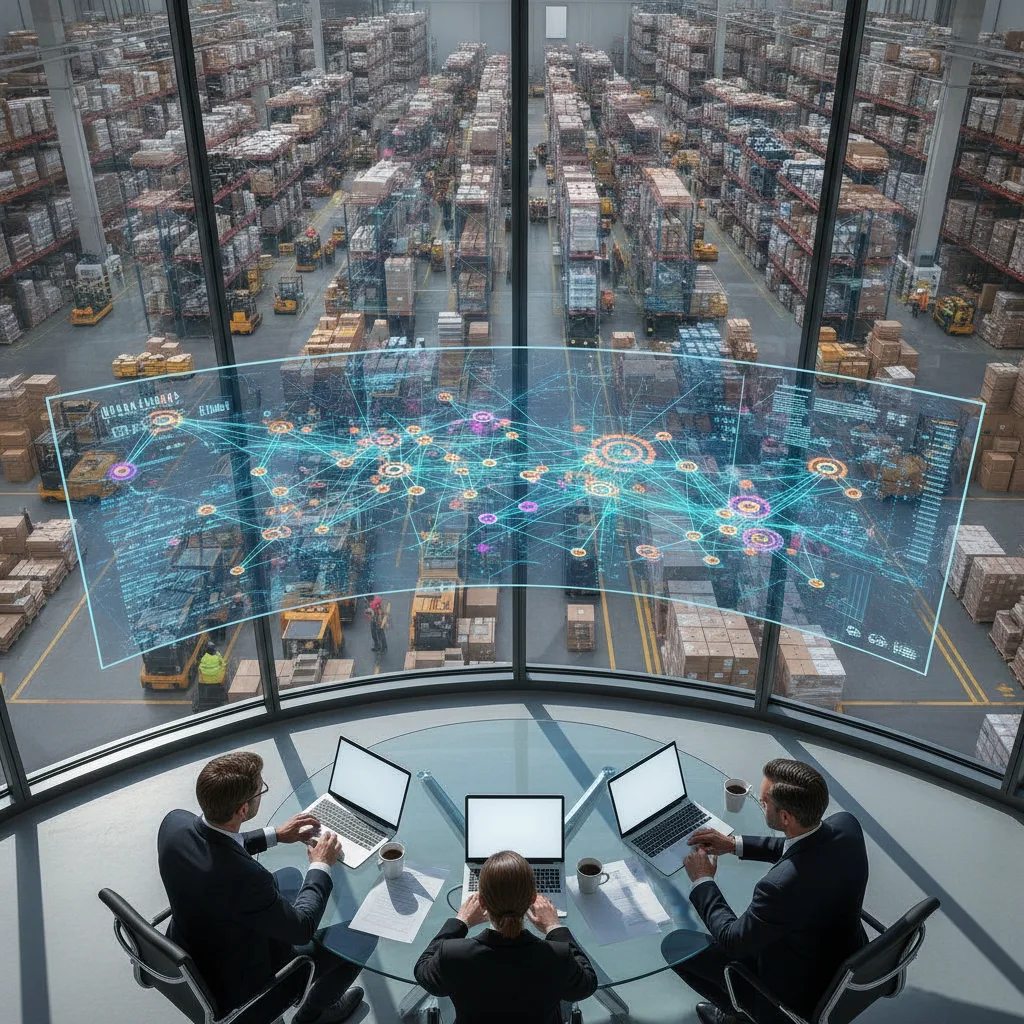
Studies on logistics outsourcing confirm that cost reduction remains the top benefit cited by executives who have already taken the plunge, with nearly one in two respondents. On the service provider side, the savings reported through the consolidation of volumes, route optimization, and inventory reduction generally range from 15 to 30 percent of logistics costs—a figure that should be confirmed through a cost analysis specific to your business.
Logistics Scalability and Peak Demand Management
A service provider with a network of warehouses and shared transportation capacity can handle peaks in activity (sales events, product launches, year-end) without requiring you to invest in warehouse space or hire permanent staff. Managing these peaks becomes a contractual adjustment rather than an operational project.
For a growing brand or an e-commerce site subject to strong seasonality, this elasticity is often more valuable than the unit savings.
Expertise, Tools, and Technologies
A well-structured service provider offers a warehouse management system (WMS), a transportation management system, EDI or API interfaces for integration with your ERP, and real-time tracking of logistics flows. You gain access to regularly updated technology modules without a significant initial investment, supported by a dedicated team of supply chain experts.
Added to this is expertise in complex regulations: ADR for hazardous materials, temperature-controlled shipping, customs formalities, and Incoterms—know-how that is difficult to maintain in-house when logistics isn’t your core business.
Time Saved for Management
Outsourcing frees up management time. Internal resources can refocus on production, business development, or R&D, while the service provider assumes a portion of the operational risks: personnel management, equipment failures, system downtime, damage, and theft.
The range of delivery options is also expanding (express, pickup locations, international, time slots), which directly improves the customer experience.
Good to know
A well-managed outsourcing project is evaluated over a period of 12 to 24 months, which is the time it takes for the service provider’s learning curve to stabilize. The first three months are never representative of the target service level.
3PL, 4PL, 5PL: Which Model Is Right for Which Level of Maturity?
The difference between a 3PL and a 4PL provider is often misunderstood, even though it determines how responsibilities are allocated. A 3PL executes; a 4PL coordinates. The table below summarizes the key distinctions that can help inform your decision.
| Criterion | 3PL | 4PL | 5PL |
|---|---|---|---|
| Lead Role | Operations, Warehousing, Order Fulfillment, Transportation | Overall management of the supply chain and coordination of multiple 3PLs | Engineering and Optimization of Multi-Stakeholder Logistics Networks |
| Assets Held | Warehouses, fleet, teams | Few or no assets, expertise, or systems | No assets, platforms, or data |
| Systems | WMS and TMS are operational | Control Tower, Multi-Carrier TMS, Consolidated KPIs | Modeling, advanced optimization, cross-company collaboration |
| Customized Company Profile | Stable volumes, need for reliable execution | Complex, multi-site, multi-vendor workflows | Extended networks, pursuit of structural consolidation |
| Level of Dependence | Moderate; service provider can be replaced on a site-by-site basis | When the level is high, control is delegated | High, with strong data integration |
If your logistics operations are spread across multiple carriers and warehouses, a 4PL model provides a level of consistency that simply combining multiple 3PL providers will never achieve. We detail the advantages and limitations of this model in a dedicated article.
Risks of Logistics Outsourcing to Consider Before Signing a Contract
Loss of operational control and visibility
The most commonly cited risk is the loss of operational control. You no longer have a direct view of your workflows; responsiveness depends on the availability of a contact person; and visibility into inventory relies on the service provider’s systems. Without real-time access to inventory and tracking data, the loss of visibility quickly becomes a loss of commercial control, with delivery time commitments that your teams can no longer make with full knowledge of the facts.
Contractual Dependence and Rigidity
Switching service providers involves an IT migration, a physical transfer of inventory, and a transition period during which service levels almost always decline. Contracts often include multi-year commitments, minimum volume requirements, and penalties in the event of a decline in business, which limits your flexibility. This rigidity is acceptable if you’re aware of it and can compensate for it; it becomes a trap when you discover it after signing the contract.
Hidden Costs
Hidden costs constitute the third—and most insidious—risk. Services outside the scope of the contract, repackaging, specific labeling, IT system adaptations, quality audits, emergency transportation, tied-up idle inventory, and end-of-contract exit fees: these are all line items that do not appear in the initial price schedule. Without strict oversight, logistics costs can rise despite outsourcing, particularly if reserved capacity is oversized.
Service Quality and Brand Image
Delays, preparation errors, damaged items, or lost packages are blamed on your brand—never on the service provider—by the end customer. Added to this are the risks of cultural mismatches, when quality standards, priorities, and service practices differ between the two organizations.
Data Privacy and Social Issues
Two risks are all too often overlooked. First, the confidentiality of logistics data—such as customer files, rates, volumes, and supplier contracts—which requires clauses compliant with the GDPR and verifiable cybersecurity commitments. Second, the labor aspect, involving a transfer of personnel that may fall under Article L1224-1 of the Labor Code and a potential change in the collective bargaining agreement—specifically, the one governing road freight transport—which can be a source of tension if the matter is addressed too late.
Logistics Outsourcing Contract: Essential Clauses
A contract is the only tool that transforms a business promise into a legally enforceable obligation. Before signing, make sure the following points are included and accurate.

- Quantified SLAs: service levels, lead times, order fulfillment error rates, breakage rates, and processing times for returns and disputes, with explicit calculation methods and exclusion criteria.
- The associated penalties and bonuses must be proportionate and actually enforceable; otherwise, the commitments remain merely theoretical.
- The rate adjustment formula: fuel indexation, social indices, trigger thresholds, and caps—to avoid being forced into renegotiations.
- The contractual reversibility clause: notice period, obligation to assist with migration, data return format, conditions for removing inventory, and associated costs.
- Data Ownership and Confidentiality: GDPR compliance, regulated onward processing, server location, and a commitment not to use commercial data.
- Governance: a steering committee that meets at set intervals, reporting on logistics KPIs, a continuous improvement plan, and an escalation procedure in the event of a major incident.
An insurance and liability clause tailored to the actual value of the goods is also essential, particularly for luxury goods, leather goods, works of art, spirits, and cosmetics, where the per-kilogram compensation limit set forth in transport agreements is significantly lower than the value of the goods being transported.
Important
A reversibility clause without an obligation to provide technical assistance and without a specified data delivery format has no practical value. This is the first point that should be reviewed by a lawyer.
How to Choose the Right Logistics Provider
Selection Criteria and Site Visits
Selection is not based on a pricing schedule but on demonstrated capability. Visit the facilities, observe the cleanliness, the organization of the picking areas, the staff turnover rate, and whether the tools they claim to have are actually in use.
Ask for references in your industry—from companies with volumes and constraints comparable to yours—and verify the relevant certifications: ISO 9001 for quality management, Authorized Economic Operator (AEO) status for smooth customs clearance, and ADR certifications for hazardous materials. Membership in a professional organization such as the TLF Union is an additional indicator of organizational structure.
Information System and the Ability to Keep Pace with Your Growth
Next, assess the maturity of the information system: its ability to interface with EDI or APIs, the depth of its reporting capabilities, the level of detail in traceability, and the degree of autonomy you retain over the data. Finally, evaluate its capacity to handle your peak volumes, its geographic coverage—including French overseas departments and territories and international locations—and its shared transportation policy.
At Défi Groupe, our international expertise, status as an Authorized Economic Operator, and customized solutions (road, air, sea, or hand-carry) enable us to closely track every shipment, from pickup to delivery, with the responsiveness and personalized service that our customers value most highly.
Does outsourcing really reduce costs?
The Three Conditions for a Real Reduction in Costs
Yes, but under three conditions. The first is to compare identical scopes, by including in the internal cost the depreciation of floor space, management expenses, licenses, insurance, and the cost of capital tied up in inventory.
The second is to eliminate hidden costs by contractually listing all services not included in the flat-rate package. The third is to manage the process. Unmanaged outsourcing can go off track; outsourcing monitored through a set of stable logistics KPIs and a monthly steering committee delivers on its promises. Our guidelines on the supply chain KPIs to monitor detail this approach.
Avoiding Loss of Control: The Issue of Pilotage
Outsourcing operations does not mean outsourcing responsibility. Maintain in-house supply chain expertise capable of analyzing data, holding the service provider accountable, and making decisions.

Insist on direct access to systems rather than monthly reports sent as attachments; formalize a documented handover of responsibilities at the outset; and keep track of your logistics costs. It is this combination—delegating execution while retaining control—that distinguishes successful outsourcing from forced dependence.
For online retailers, our approach toe-commerce logistics outsourcing is described in detail on our website.
Taking Supply Chain Outsourcing to the Next Level
Supply chain outsourcing is neither a magic bullet nor a sign of giving up. It is a transfer of risk and expertise that yields real benefits (cost variability, scalability, access to expertise and tools), provided it is governed by a specific contract and disciplined management.
Companies that fail are rarely the victims of a poor service provider; rather, they have generally neglected the scoping phase, SLAs, and reversibility. If you’re considering upgrading your logistics model, we can work with you to analyze your workflows and propose a plan tailored to your specific requirements.
Contact our teams or request a quote to evaluate your project.
FAQ
Should a company outsource its entire supply chain all at once?
Rarely. A phased outsourcing approach—for example, starting with transportation and then moving on to warehousing—allows you to test the relationship, fine-tune SLAs, and minimize the impact of a rocky start. It also facilitates the transfer of skills between your teams and those of the service provider.
What contract term is best for a first outsourcing project?
A term of two to three years is a common compromise—long enough for the service provider to recoup its initial investments, yet short enough to leave you an exit strategy. What matters most is the reversibility clause, rather than the term itself.
What happens to my logistics employees if we outsource?
Depending on the circumstances, the transfer may fall under Article L1224-1 of the Labor Code, which requires the business acquirer to assume the existing employment contracts. This issue must be thoroughly evaluated well in advance with legal counsel and communicated to employee representatives in a timely manner.
Is outsourcing compatible with a rigorous CSR approach?
Yes, provided that environmental commitments are included in the contract: emissions monitoring, load factors, fleet motorization, and route consolidation. Verify that the service provider publishes measured results and undergoes a recognized external assessment.
How can you secure high-value goods entrusted to a third party?
In addition to ad valorem insurance, insist on detailed security specifications: dedicated secure areas, access control, item-by-item traceability, authorized personnel, and escort or hand-carry procedures for the most sensitive shipments.