
Exporting Goods to West Africa: 2026 Guide
Documents, ECOWAS customs clearance, ports, trade corridors, modes of transportation, and total cost: This 2026 guide helps you prepare for an export to West Africa without any delays or unpleasant surprises.
Exporting goods to West Africa presents a real opportunity for French manufacturers, brands, and e-commerce businesses. But between national customs regulations, regional frameworks such as ECOWAS and UEMOA, congested ports, and road corridors to landlocked countries, a poorly prepared shipment can be held up for several weeks.
This 2026 guide explains how to secure documents, handle customs clearance, choose a mode of transportation, and manage your budget. It covers export formalities, a comparison of logistics corridors, and key considerations for each country.
Exporting Goods to West Africa: What Is the Regulatory Framework?
The first rule is simple: any goods crossing a border must be declared in detail, which assigns them a customs procedure. This requirement is set forth, in particular, in the WAEMU Customs Code. The ECOWAS Customs Code, for its part, states that goods remain subject to the duties and taxes defined by each country’s national legislation.
In other words, there is a common regional framework, but its practical implementation remains a national matter.
In France
The exporter files a customs declaration with the General Directorate of Customs. The exporter must be able to provide proof that the goods have actually left the customs territory of the European Union. This proof determines the tax treatment of the transaction and must be retained with the rest of the commercial documentation.
Destinations
The local importer must generally be registered with the relevant government agency and have a foreign trade operator identification number. This is an essential prerequisite for using a licensed customs broker.
What documents are required to export to West Africa?
The exact list depends on the product and the country, but the basic set of documents remains consistent. Here are the documents required for virtually all export applications to ECOWAS.
Documentation to be provided
- Detailed commercial invoice including value, Incoterm, weight, and a precise description of the goods
- Packing list showing the number of packages, dimensions, and markings
- Transportation document: ocean bill of lading, air waybill, or CMR
- Export Customs Declaration and Proof of Exit from the Country
- Certificate of Origin, often required for the application of regional preferential trade arrangements
- Sanitary and Phytosanitary Certificate for Foodstuffs, Agricultural Products, and Products of Animal Origin
- Certificate of Conformity when the country requires a pre-shipment inspection program
- Export license or specific authorization for regulated products
- Certificate of Cargo Insurance
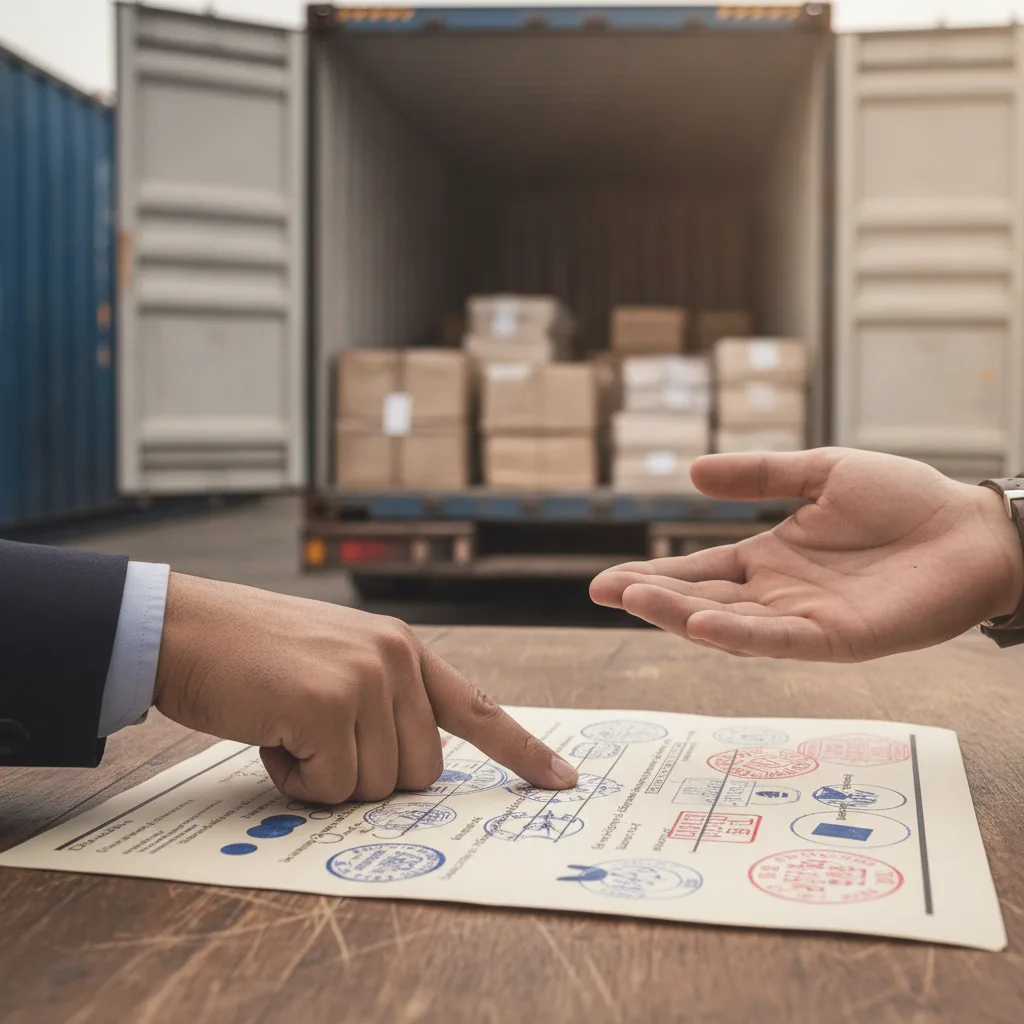
The devil is in the details. A description that is too vague on the commercial invoice, a missing net weight, or an inconsistency between the packing list and the bill of lading is enough to trigger a physical inspection and a fee for holding the cargo at the port. We recommend having the customs broker review the entire set of documents before shipment, not after.
Tariff Classification, Customs Value, and Incoterms: How to Avoid Assessments?
It all starts with the Harmonized System (HS) code. Tariff classification determines import duties and taxes, applicable restrictions, required supporting documents, and, in some cases, the need for a license. An error in the HS code is one of the most common causes of disputes during customs clearance in West Africa, often resulting in reassessments and fines.
Tariff Classification Process
Describe the product
Write a detailed description of the merchandise.
Identify composition and use
These two factors have a direct impact on the rankings.
Determine the HS code
Select the code that corresponds to the actual nature of the product.
Check permissions
Check the applicable regulations in the target country.
Check the restrictions
Identify the necessary restrictions and authorizations.
Confirm the analysis
Check with local customs or your freight forwarder.
There is also the issue of customs value. For exports, the declared value generally corresponds to the value of the goods at the point of exit, including transportation and costs up to the border, in accordance with applicable rules. For imports, the local authorities apply their own valuation methods, sometimes using reference values.
The Incoterm you choose has a direct impact on this process. FCA, CPT, CIP, DAP, and DDP do not allocate the same costs or risks. For your first transaction, it’s best to avoid committing to a DDP in a country where you are unfamiliar with the tax system or port fees. Our article on the importance of Incoterms in international trade explains this allocation in detail.
Is an export to West Africa in the works?
Tell us about your shipment: product, country, volume, and delivery times. We’ll provide you with a free quote and assign you a single point of contact from pickup to delivery.
By sea, road, or air: Which mode of transportation should you choose?
| Fashion | When to Choose It | Point to Watch For |
|---|---|---|
| Maritime | Large volumes, containerized freight, regular shipments, non-urgent goods | Port selection, port operations, quality of road connections |
| Regional Truck Driver | Regional distribution and transport to landlocked countries from the port | Checkpoints, road conditions, load failures |
| Aerial | Urgent shipments, high-value goods, critical replacement parts, samples, sensitive goods | Higher cost, compared to the cost of a supply disruption |
Maritime Transport: The Backbone of Trade
Major shipping routes serve Dakar, Abidjan, Tema, Lomé, Cotonou, and Lagos with reliable service from Le Havre, Antwerp, or Algeciras. The choice of port depends on the final destination, the efficiency of customs clearance, port handling costs, and the quality of road connections.
Regional road transport: the most vulnerable link
Road transport takes over from the port. It is essential for regional distribution and for transporting goods to landlocked countries. It is also the most vulnerable link in the chain, due to road checkpoints, road conditions, and transshipment issues.
Air Freight: When Urgency Is Justified
The cost of air freight is higher, but it should be compared to the actual cost of a supply disruption, not just the price of the container. Our air and ocean freight solutions support you with both modes of transport.
Logistics Corridors and Ports of Entry: How Do They Compare?
The best corridor isn't necessarily the shortest one. You need to compare the total cost, actual transit time, reliability, frequency of inspections, and the quality of the local partner network. The table below summarizes the key factors to consider.
| Destination | Port and Corridor | Points to Watch For |
|---|---|---|
| Benin, Niger | Port of Cotonou, Cotonou-Niamey Corridor | Customs transit, checkpoints, road conditions |
| Togo, Burkina Faso | Port of Lomé, Lomé-Ouagadougou Corridor | Transit Formalities and Trucking Transit Times |
| Ivory Coast, Mali | Port of Abidjan, routes to Bamako | Port congestion, safety of the land route |
| Senegal, Mali | Port of Dakar, Dakar-Bamako Corridor | Distance, transportation costs, transit management |
| Ghana | Port of Tema, regional road network | Documentation in English, local standards |
| Nigeria | Lagos Ports, Inland Network | Congestion, local procedures, foreign exchange regulations |
An UNCTAD study on the Cotonou-Niamey corridor documented the obstacles faced by operators, particularly those related to the condition of infrastructure, transit procedures, and the proliferation of inspections. Academic studies on ECOWAS countries point to the same conclusion: logistics supports regional trade, but its impact remains limited by costs, delays at borders, and poor coordination among government agencies.
How does customs transit to Mali, Burkina Faso, and Niger work?
For a landlocked country, goods are placed under a customs transit procedure at the port of unloading. They are then transported under seal and under bond to the customs office of destination, where final customs clearance takes place.
This process requires close coordination between the shipping agent, the port customs broker, the regional trucking company, and the agent in the destination country. Each transshipment presents a risk, both in terms of delivery times and the integrity of the packages.
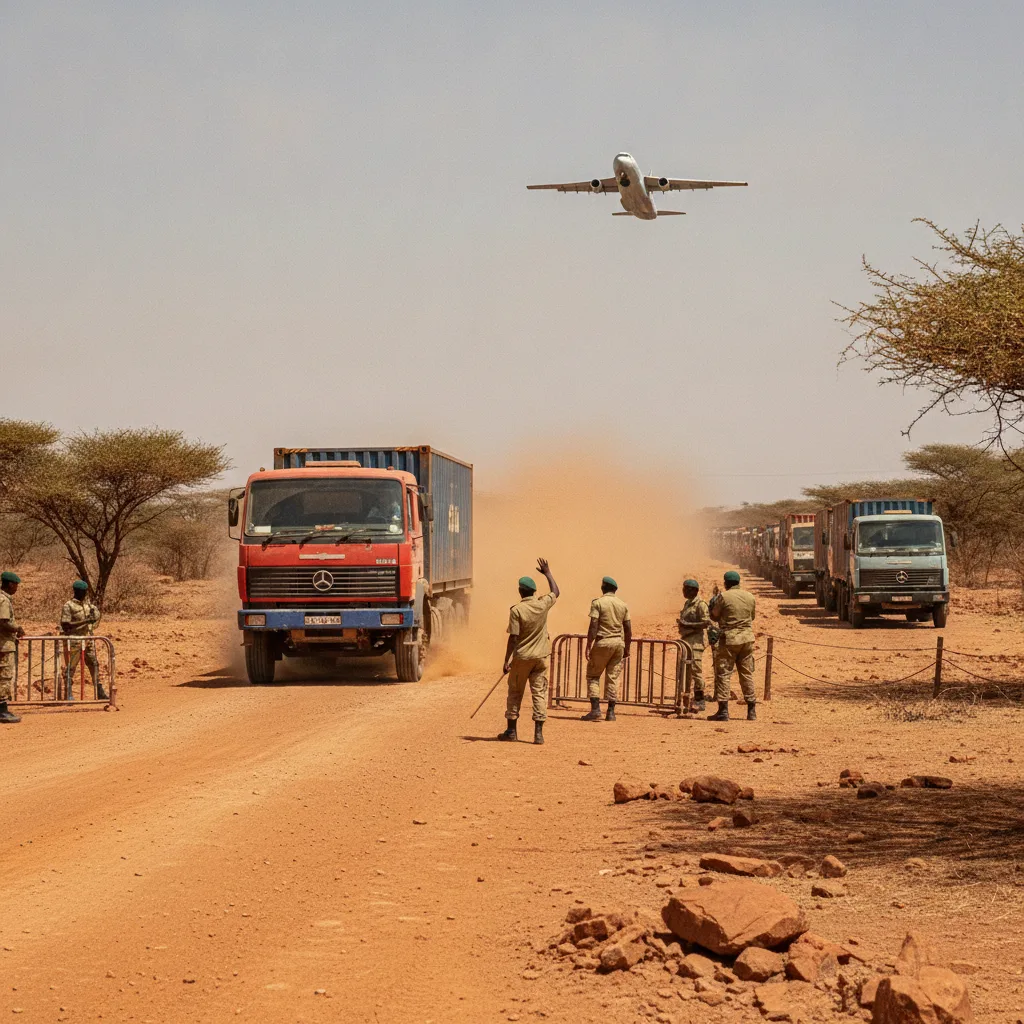
Senegal, Ivory Coast, Cameroon, Nigeria: What unique characteristics should we anticipate?
Senegal
The Port of Dakar serves as a hub for trade flows and acts as a gateway to Mali. Incomplete documentation is quickly referred to the inspection process, and the advance import declaration is a mandatory requirement for many categories of products.
Ivory Coast
The Port of Abidjan offers good maritime connectivity and a large hinterland. On the other hand, it experiences periods of heavy congestion and requires strict compliance with documentation requirements, particularly the certificate of conformity.
Cameroon
Although often integrated into West African trade flows by French shippers, Cameroon belongs to a different regional group, with the port of Douala serving as its main point of entry. Port turnaround times and local formalities require a reliable local representative.
Nigeria
The largest and most demanding market. Congestion at the Lagos terminals, foreign exchange regulations, and stricter controls on certain product categories—all of these factors call for advance preparation and a fully registered local importer.
How much does it cost to export to West Africa?
The cost of shipping goods to West Africa is never limited to the freight rate alone. To get a reliable estimate, add up all of the following items.
- Product Cost and Export Packaging
- Domestic transportation in France, pickup and unloading at the dock
- International Freight and Cargo Insurance
- Documentation Fees
- Port fees and handling charges, on departure and arrival
- Import Duties and Taxes
- Cost of customs transit and subsequent road transport
- Possible parking fees
Add a buffer for capital expenditures, since they're what throw budgets off track.
No standard rate can be quoted. The price depends on the port, the season, the ship’s load factor, the type of container, and the nature of the cargo. The only reliable approach is a case-by-case quote based on specific requirements. Please feel free to send us your request for a quote.
Do you need to use a freight forwarder to export to West Africa?
Using an international freight forwarder or a customs broker is not always mandatory, but it is strongly recommended. In practice, the import declaration is almost always filed by a locally licensed customs broker. The real issue is choosing the right partner.
Criteria for Choosing Your Partner
- Proven experience in the target country
- Proficiency in local customs procedures
- Network in Ports and at Borders
- Ability to manage transit operations
- Transparency of Fees
- Litigation Management
- Handling of Regulated Goods
Our Approach
At D&fi Groupe, we manage these shipments as a freight forwarder, with Authorized Economic Operator (AEO) status, which facilitates customs procedures and streamlines inspections.
Our teams design customized solutions—whether by road, air, sea, or hand-carry—for the most sensitive shipments and provide end-to-end tracking, from pickup to final delivery. Our customs expertise rounds out this service.
Take Your Exports to West Africa to the Next Level
Exporting to West Africa requires a systematic approach rather than just luck. A validated HS code, impeccable documentation, an Incoterm chosen with full knowledge of the facts, a shipping route selected based on total cost, and a partner capable of managing the transit all the way to the destination office are enough to transform a risky shipment into a controlled one.
This is the work we do every day for our industrial clients, e-commerce businesses, and luxury brands. Let’s discuss your project: describe your workflow to us, and we’ll get back to you with a quote based on your specifications.
Frequently Asked Questions
Is a certificate of origin always required to export to ECOWAS?
It is not required for all goods, but it becomes essential as soon as a regional preferential tariff regime or a trade agreement is invoked. Without this document, the importer generally pays the full rate.
Is it possible to consolidate shipments from multiple customers into a single container bound for West Africa?
Yes, ocean groupage is common and appropriate for shipments smaller than a full container load. However, it requires an additional transshipment during unloading and careful coordination of documentation among the various recipients.
What happens if the goods are held up at the port of destination?
Containers or packages incur parking and demurrage charges that accrue daily. The priority is to identify the exact cause (documentation error, disputed tariff classification, missing certificate) and then resolve the issue through the local customs broker.
Is shipping insurance included in the freight rate?
No, it is covered by a separate contract and depends on the Incoterm selected. For long-distance shipments with multiple transshipments, ad valorem coverage is strongly recommended, particularly for high-value goods.
How can I ensure the security of my first shipment to a new country in West Africa?
A small-volume test shipment allows us to validate the document workflow, actual turnaround times, and the responsiveness of the local contact before transitioning to regular shipments. The lessons learned from this initial shipment then serve as the basis for the logistics specifications.
Secure Your Next Shipment
Fill out the form: a D&fi Groupe expert will review your cash flow and respond with a proposal tailored to your destination country.